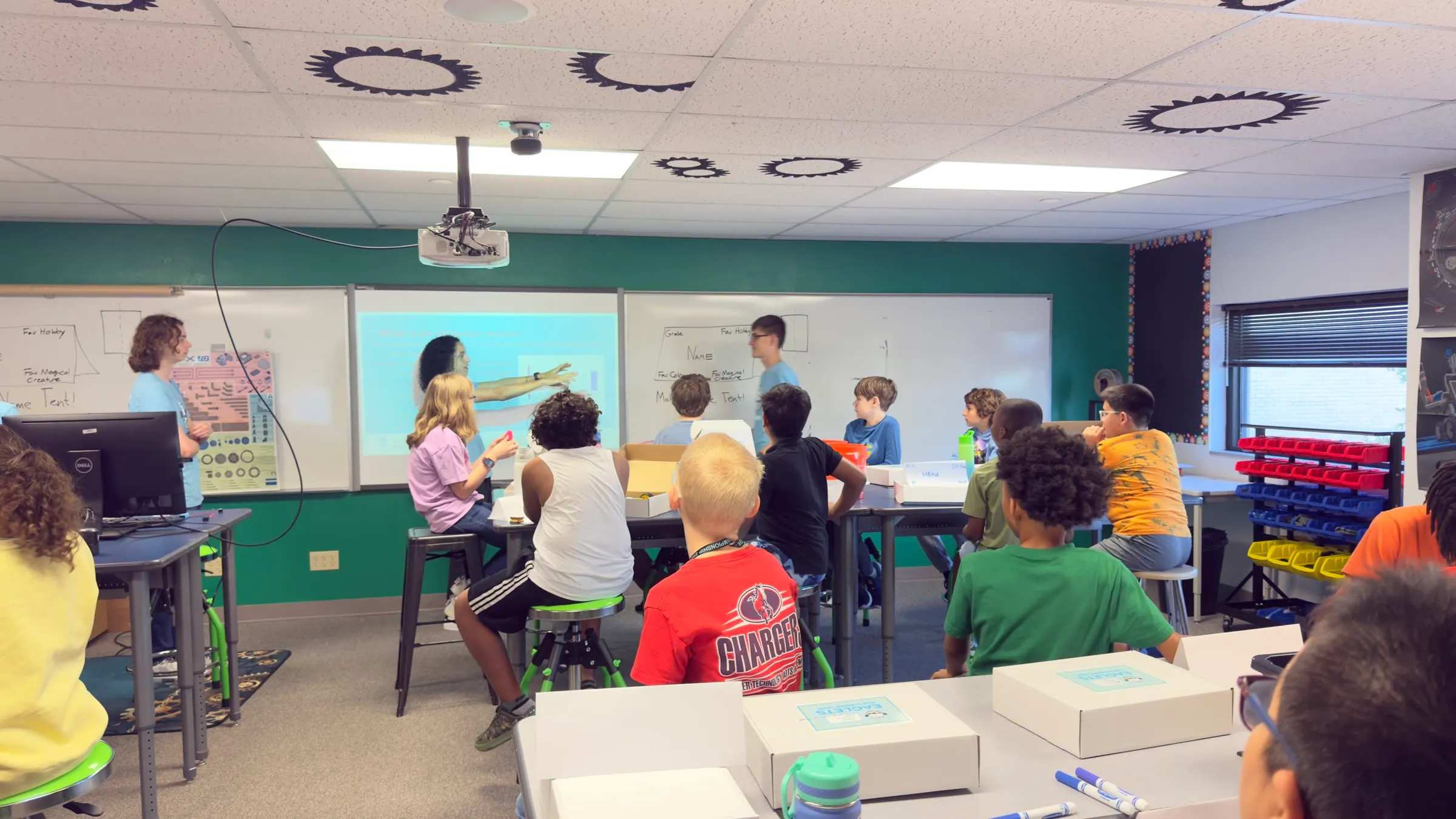
Host a program
We bring the robots to you
Our student instructors arrive with the kits, the curriculum, and the teaching. You provide the students, the room, and one adult who owns the day. Camps hosted in partner communities are free for the students who attend.
Who this is for
Where Eaglets programs work
- Elementary and middle schools
- Libraries
- Youth programs
- Community organizations
- STEM nights and community events
Formats
What we can run
Availability changes with the season and how many trained student instructors we have. These labels are current.
- Available
Introductory workshop
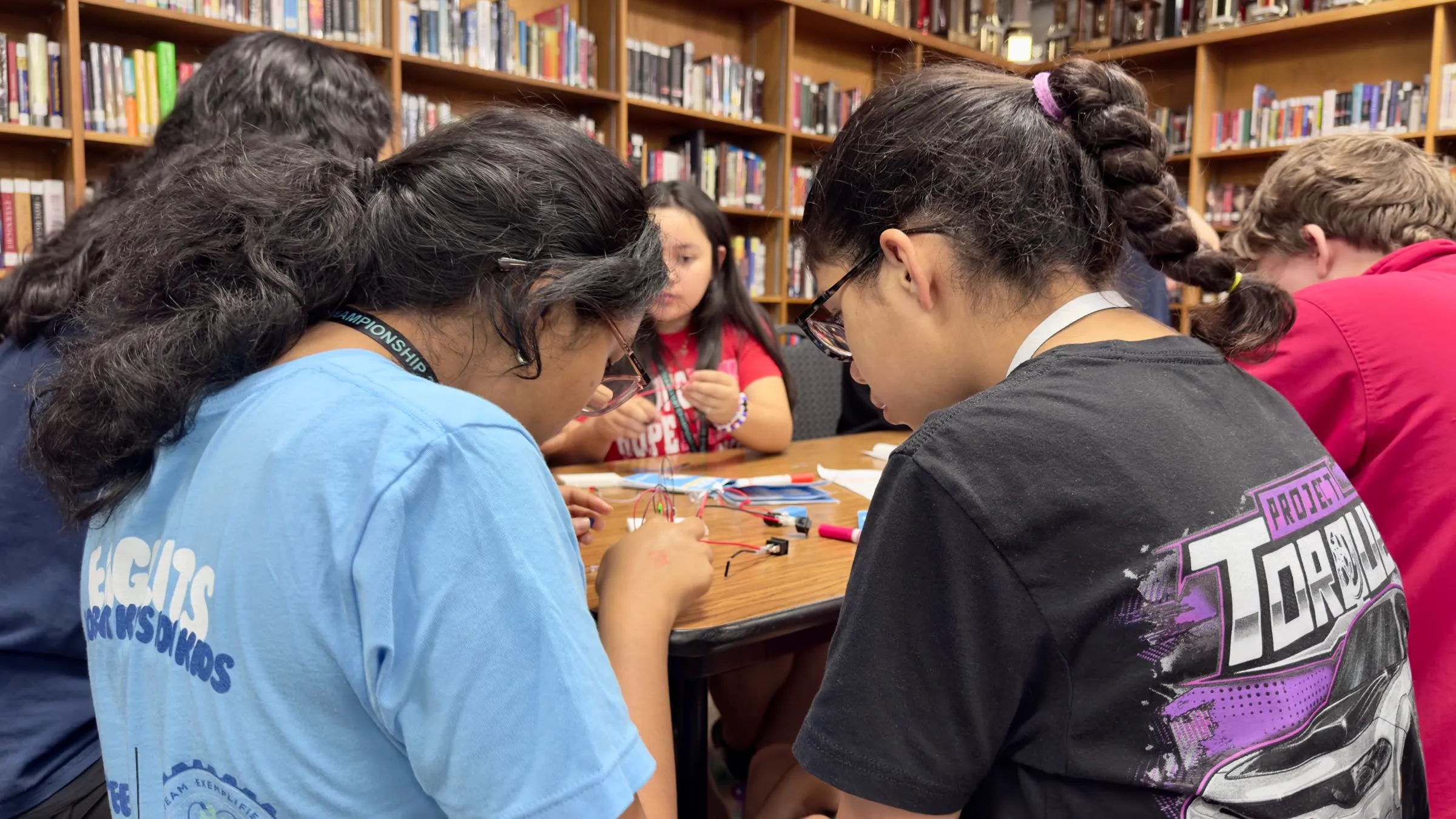
One session. Students meet the robot, wire a basic circuit, and get something moving before they leave.
- Limited
Multi-session camp
Several days or several Saturdays. Students build the full robot, program it, and work through a sequence of challenges.
- Available
Demonstration and hands-on station
For STEM nights and community events. Shorter, higher throughput, less depth.
- Under development
Teacher-supported classroom series
Runs inside the school day with a classroom teacher, spread across several weeks.
- Limited
Volunteer-led outreach event
A smaller team at a community or library event.
Who does what
Splitting the work
Worth agreeing on early. Most of what goes wrong in a program traces back to an assumption on this list.
Eaglets may provide
- Robot kits for participating students
- Curriculum and an activity plan matched to the grade range
- Student instructors who have taught the material before
- Volunteer training ahead of the program
- Setup and troubleshooting guidance on the day
What we can actually bring depends on the format and the season, so we will be specific in the first conversation.
The host provides
- Approved adult supervision throughout
- Space, tables, power, and internet
- Your own student registration and consent process
- Local safety and emergency procedures
- Laptops or devices, depending on the format
- A planning contact we can reach
Eaglets instructors are students. Adult supervision is the host's responsibility, and it is not optional.
Planning
How a program comes together
Seven steps from first email to follow-up.
- Step 01
Initial conversation
What you want students to get out of it, and what your site can support.
- Step 02
Program fit and date check
We confirm which format works and whether the dates are realistic for our team.
- Step 03
Responsibilities and budget
Who provides what, and what it costs.
- Step 04
Registration and consent
You run registration and collect consent through your own process.
- Step 05
Volunteer training
Our instructors rehearse the specific curriculum for your program.
- Step 06
Delivery
We show up early, set up, and run it.
- Step 07
Follow-up and evaluation
What worked, what did not, and what we would change.
Lead time depends on the format and the season. Get in touch as early as you can and we will tell you honestly whether your dates are workable.
Get in touch
Tell us about your students
Email us with as much of the following as you know. Nothing here is required to start a conversation. Send what you have.
- Organization
- Contact name and work email
- Contact role
- City
- Student grade range
- Estimated student count
- Preferred date range
- Desired format
- Available space and devices
- Funding status
- Accessibility needs, at a high level
- Anything else we should know
Please do not send student names or student contact details. Registration and consent stay with your organization, through your own process.