
About
Our story
Five students, no model to follow, and a conviction that the distance between watching a robot and understanding one was worth closing.
Eaglets began in 2020 with five students in their junior year of high school, working from the observation that robotics demonstrations were easy to find and chances to actually build something were not. Watching a robot move teaches you very little about why it moves.
They had limited resources and no existing programme to copy. By the account of one of the founders, they scraped together what they could to get a first camp running, and the structure arrived only later, once enough people had joined to make it necessary. Disagreement was constant in that first year: five people with strong views on how the thing should grow. Learning to resolve it rather than route around it is remembered as one of the more valuable parts of the experience.
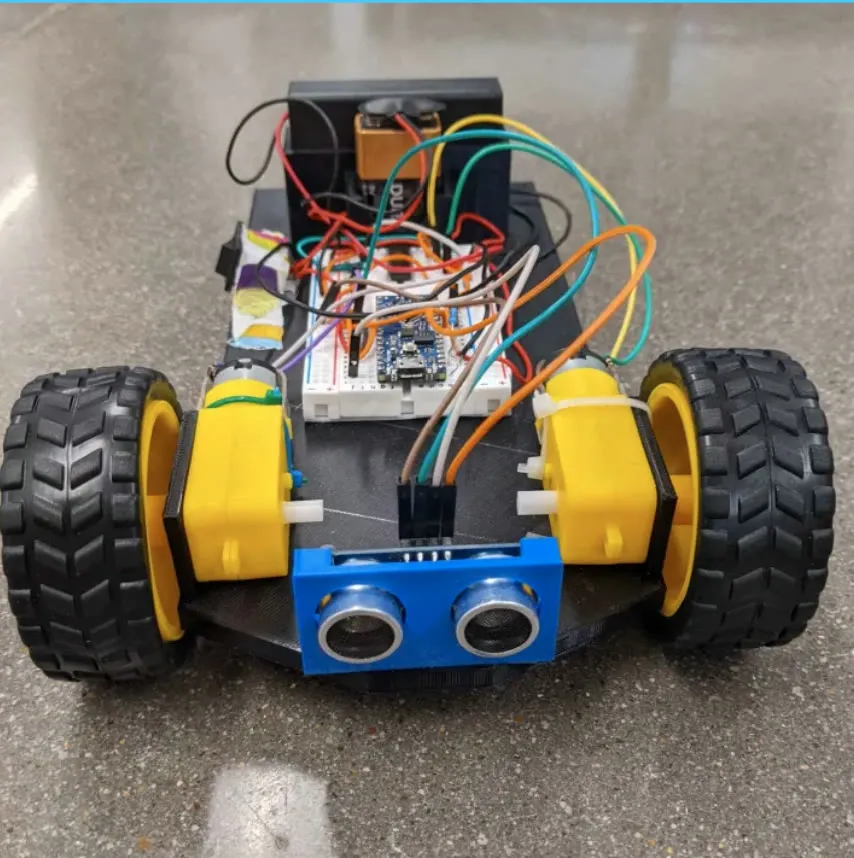
What they built was a robot simple enough for a younger student to assemble, wire, program, test, and improve. The first version was rough. Assembly consumed most of the session and left almost no time for the programming the camp existed to teach, which turned out to be the most instructive failure of the year: every revision since has been measured against how much of a camper's morning it gives back.
The kit is now several generations on, and each generation exists because the previous one broke, confused someone, or ran out of battery partway through a challenge. The project grew into camps across Texas, a written curriculum, and outreach that reaches well beyond the students who attend.
Nobody running Eaglets today was there in 2020. That is deliberate. Officers hand the organization to the next group, who change it. What has not changed is who does the work.
Values
Four commitments, and how you would know
These are the four values Eaglets states in its own sponsorship materials. Values are cheap to declare, so each one below is paired with the observable thing that would tell you whether it holds.
Student-Led
Students design the kit, create the learning activities, teach the sessions, and run the program, with appropriate adult oversight.
If an adult had to write the curriculum, it is not this.
Accessibility
Programs are built to welcome students who are new to robotics, with clear prerequisites, transparent costs, and a real path to request an accommodation.
A parent should be able to answer “is this for my kid?” in two minutes, without emailing anyone.
Community Impact
Eaglets works with schools and community organizations to bring hands-on learning to students where they already are.
The program travels to the students. They do not have to find their way to us.
Innovation
The team tests its hardware, software, curriculum, and teaching methods, and changes them based on what actually happened in the room.
Every kit revision exists because something failed in front of a camper.
This only works with people
Every camp needs student instructors, tested kits, and a school willing to open a room.