
Impact
What the record shows
Eaglets publishes what program records and outside sources support. Where the evidence is not there yet, this page says so instead of estimating.
The gap
Watching a robot is not understanding one
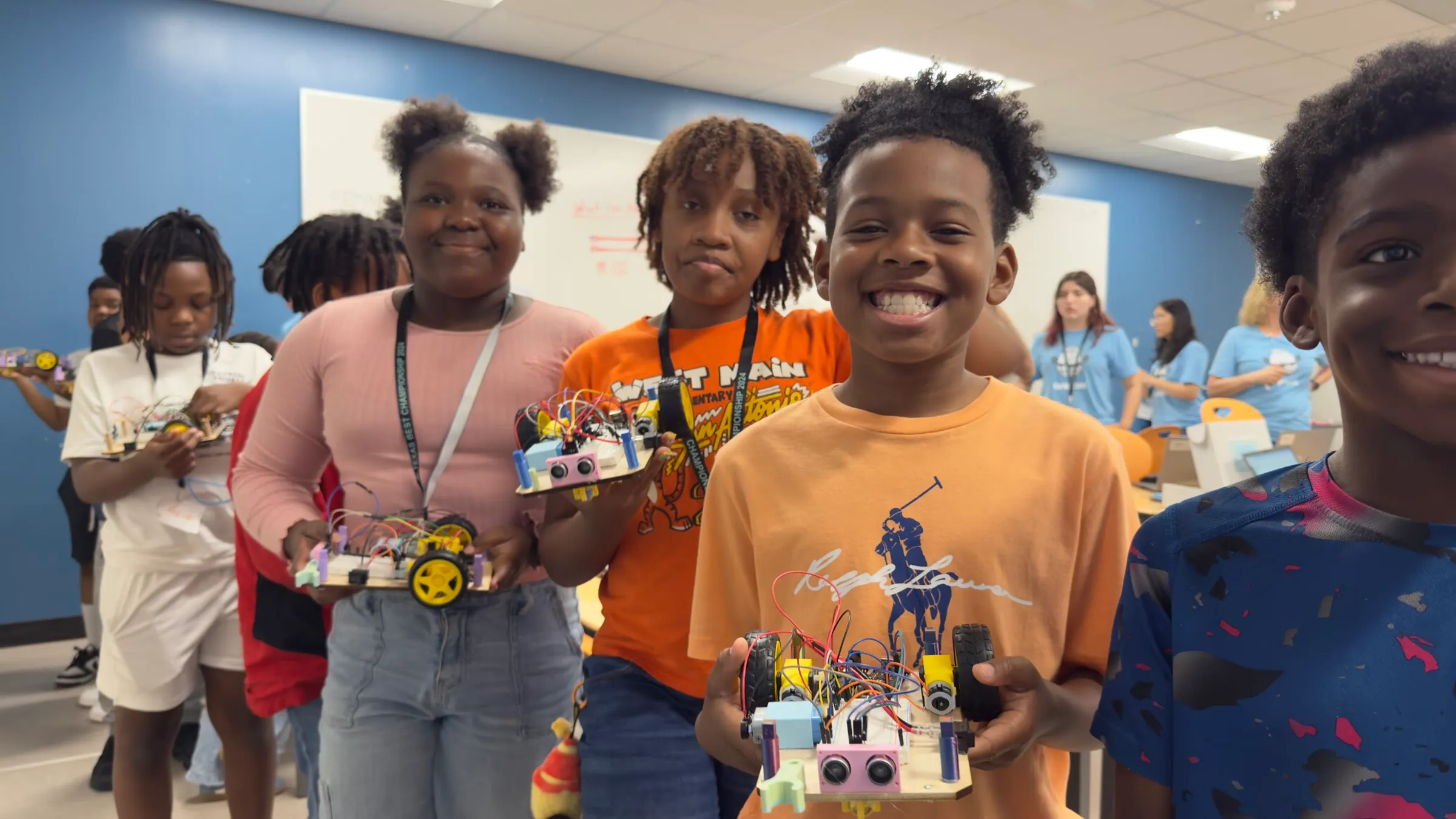
Plenty of students get to see a robot. Far fewer get to build one, wire it wrong, find the mistake, and fix it. That second experience is what changes whether a student thinks engineering is something they could do, and it usually requires equipment, curriculum, and someone with time to teach.
Eaglets exists to close that gap for students in grades 3 through 8, particularly at schools and community sites that would not otherwise run a program like this.
The model
Why students teaching students works
Students design the kit
The people building the curriculum are close enough in age to remember which explanations actually landed.
Students teach it
A younger student watching a high schooler solve a wiring problem gets a much shorter path to "I could do that" than watching an adult do the same thing.
Students run the program
Logistics, partnerships, budgets, and training are all student responsibilities. That is the second curriculum, and it is not simulated.
Evidence
Camp Code 2025
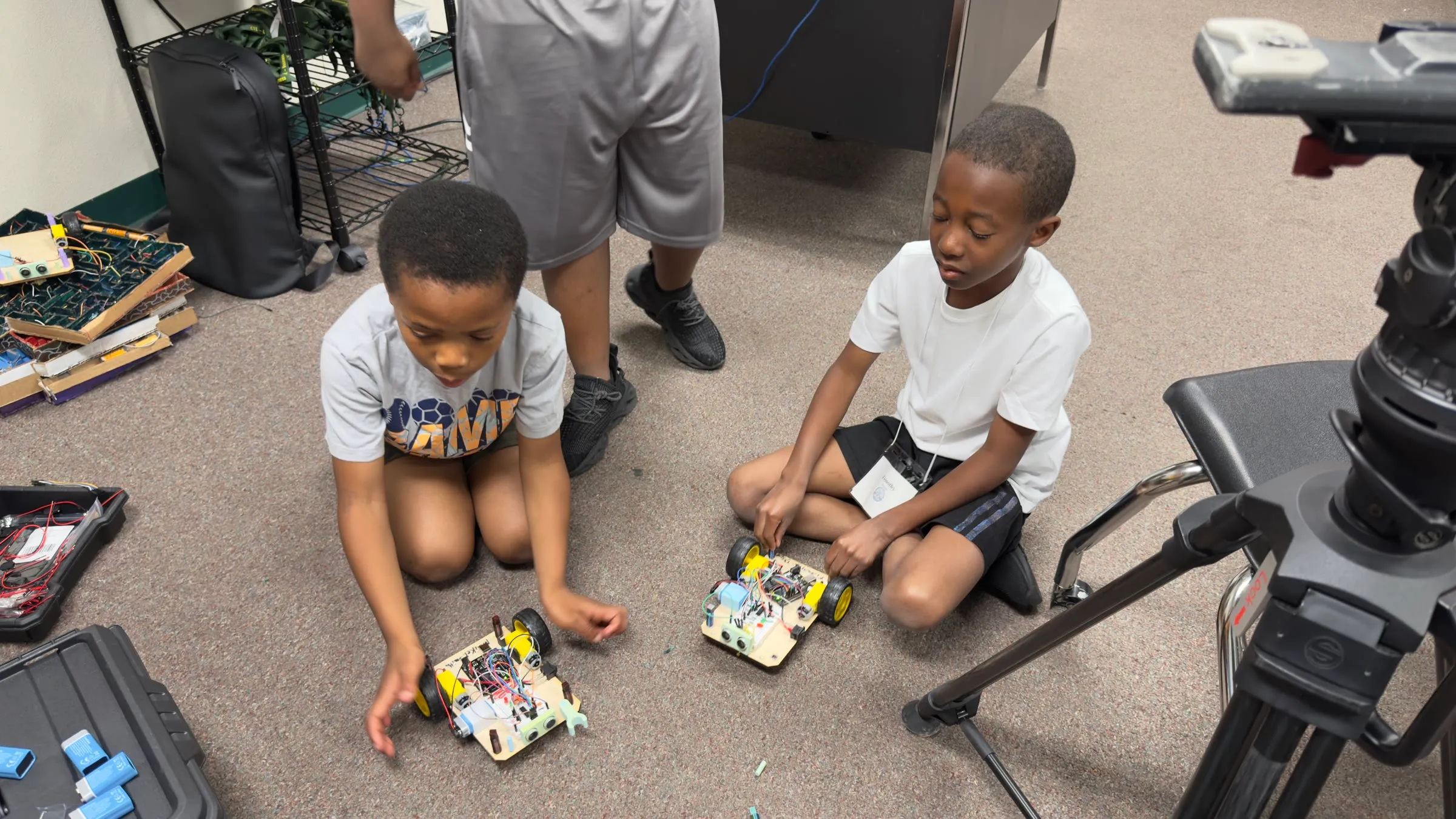
During Camp Code 2025, Eaglets students helped bring hands-on robotics instruction to participating Texas communities through a Texas Workforce Commission-funded initiative with BEST of Texas Robotics. Students used custom-built robots, learned programming and electronics, and worked through engineering challenges guided by student instructors.
What outside sources reported
- Allen ISD reported a robotics grant of roughly $99,000 and more than 200 kits produced.
- KTRE covered a Diboll ISD camp with more than 20 students, and described the custom student-created curriculum.
- KSAT covered a Harlandale ISD camp in San Antonio where elementary and middle school students built and programmed robots.
- BEST of Texas Robotics described Chillicothe as the first of ten camps in its own Camp Code series.
Each figure above belongs to the organization that reported it. The Texas Workforce Commission grant was awarded to BEST of Texas Robotics; Eaglets contributed student-created camps, robot kits, curriculum, and instruction.
Method
How Eaglets counts
It is easy to make an outreach number look bigger than it is: count every session a repeat student attends, add projected camps to delivered ones, or round an estimate into a fact. Eaglets tracks each program against a register: host, dates, sessions, unique registered students, unique attending students, volunteer hours, kits used. It publishes a figure only once the register supports it and the counting method is written down.
That is why you will not find a headline participation total on this page yet. The reconciliation is in progress. When a number goes up, the method behind it goes up with it.
Evidence, strongest first
- 01Attendance records with a documented counting method
- 02Completed program reports
- 03Host confirmation
- 04Participant or guardian surveys
- 05Pre and post learning measures
- 06Public coverage
- 07Internal estimates, clearly labelled as estimates
Coverage
In the news
- Chillicothe camp (opens in a new tab)
BEST of Texas Robotics · August 4, 2025
- Diboll ISD students learn about STEM opportunities, work with robots (opens in a new tab)
KTRE · July 31, 2025
- San Antonio students dive into robotics at Harlandale ISD camp (opens in a new tab)
KSAT · June 25, 2025
Help this reach more students
Programs happen when a school asks for one and when someone funds the kits. Both routes are open.