
The kit
How the kit evolved
Four generations, each one built because the last one taught the team something. This is the part of engineering that does not usually get photographed.
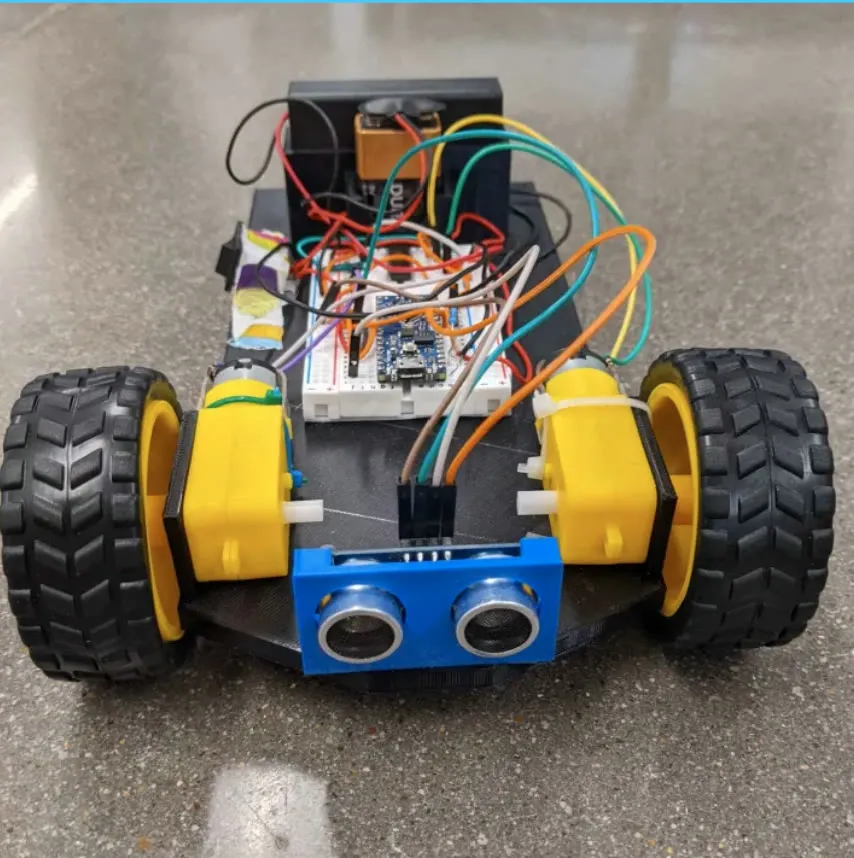
Generation 1
V1
The first working platform, and proof that a younger student could assemble and program a robot in a single session.
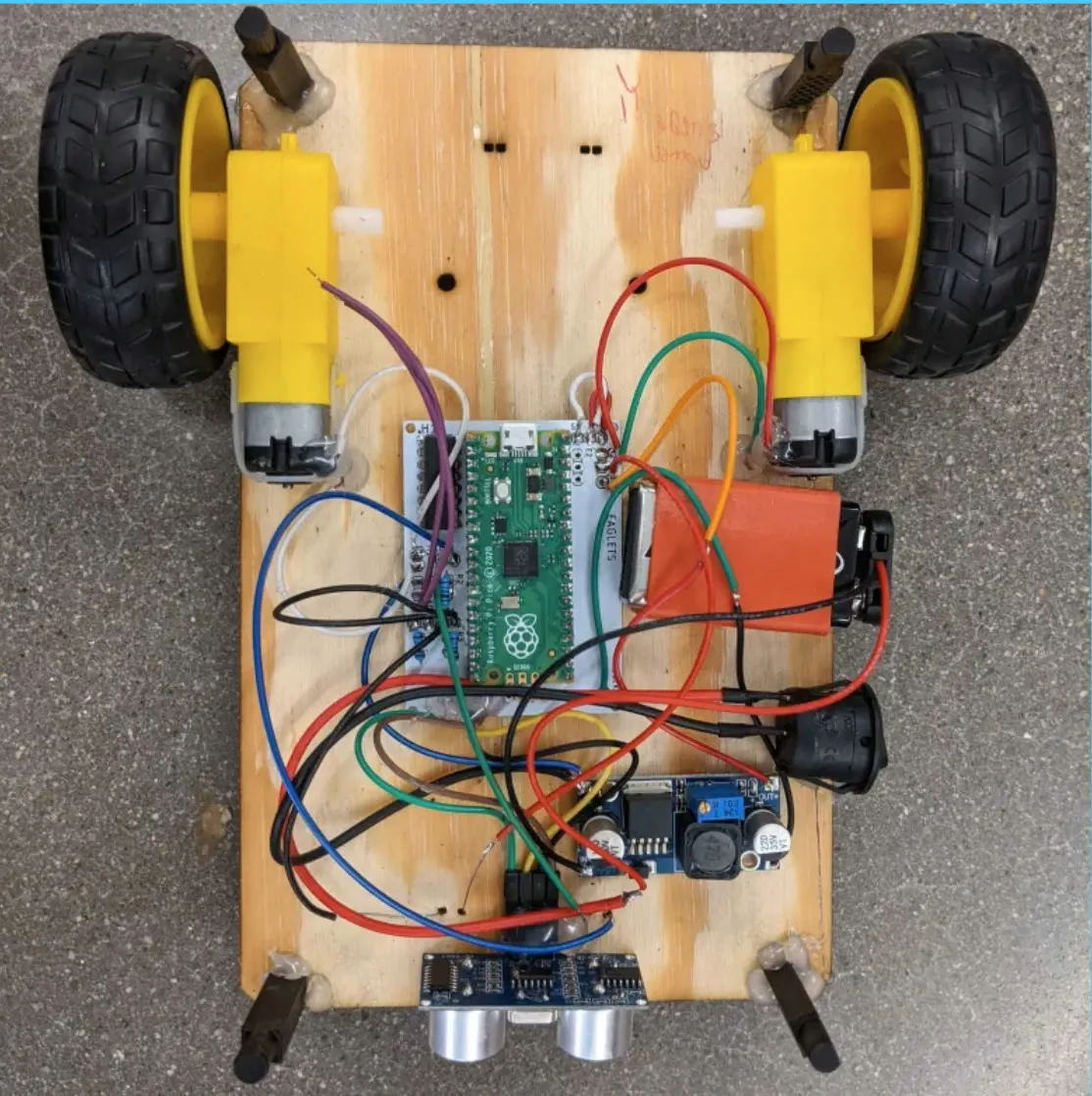
Generation 2
V2
Assembly simplified after the first camps showed where students got stuck.
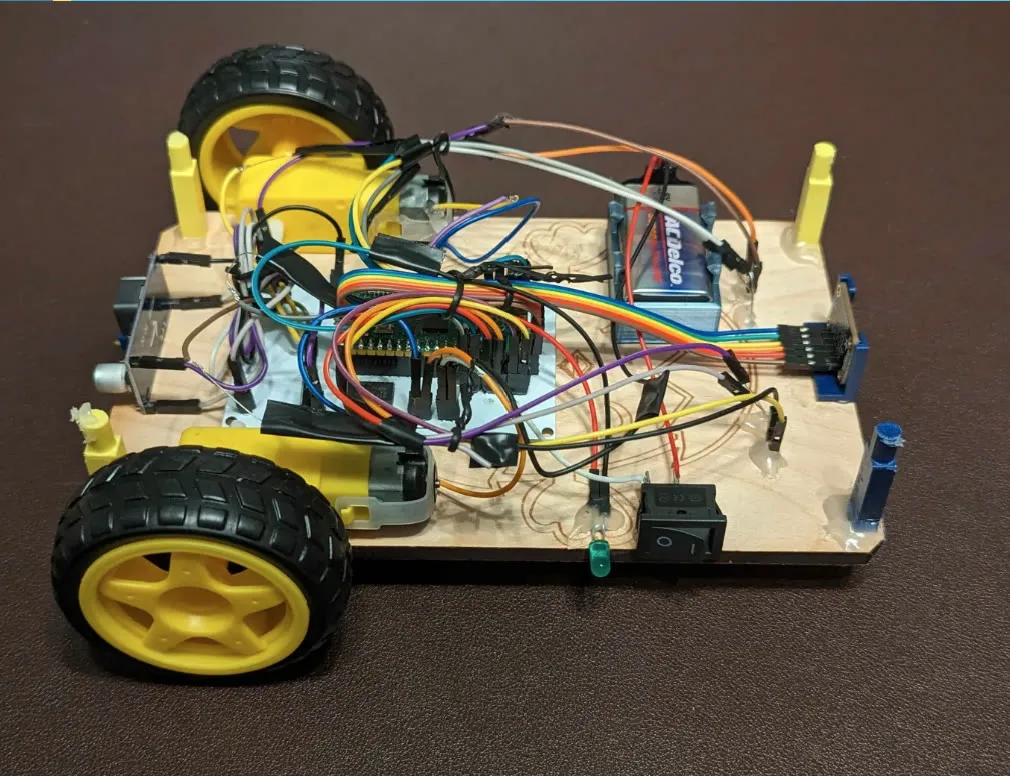
Generation 3
V3.2
Sensor input added, turning the robot from something that follows a script into something that reacts.
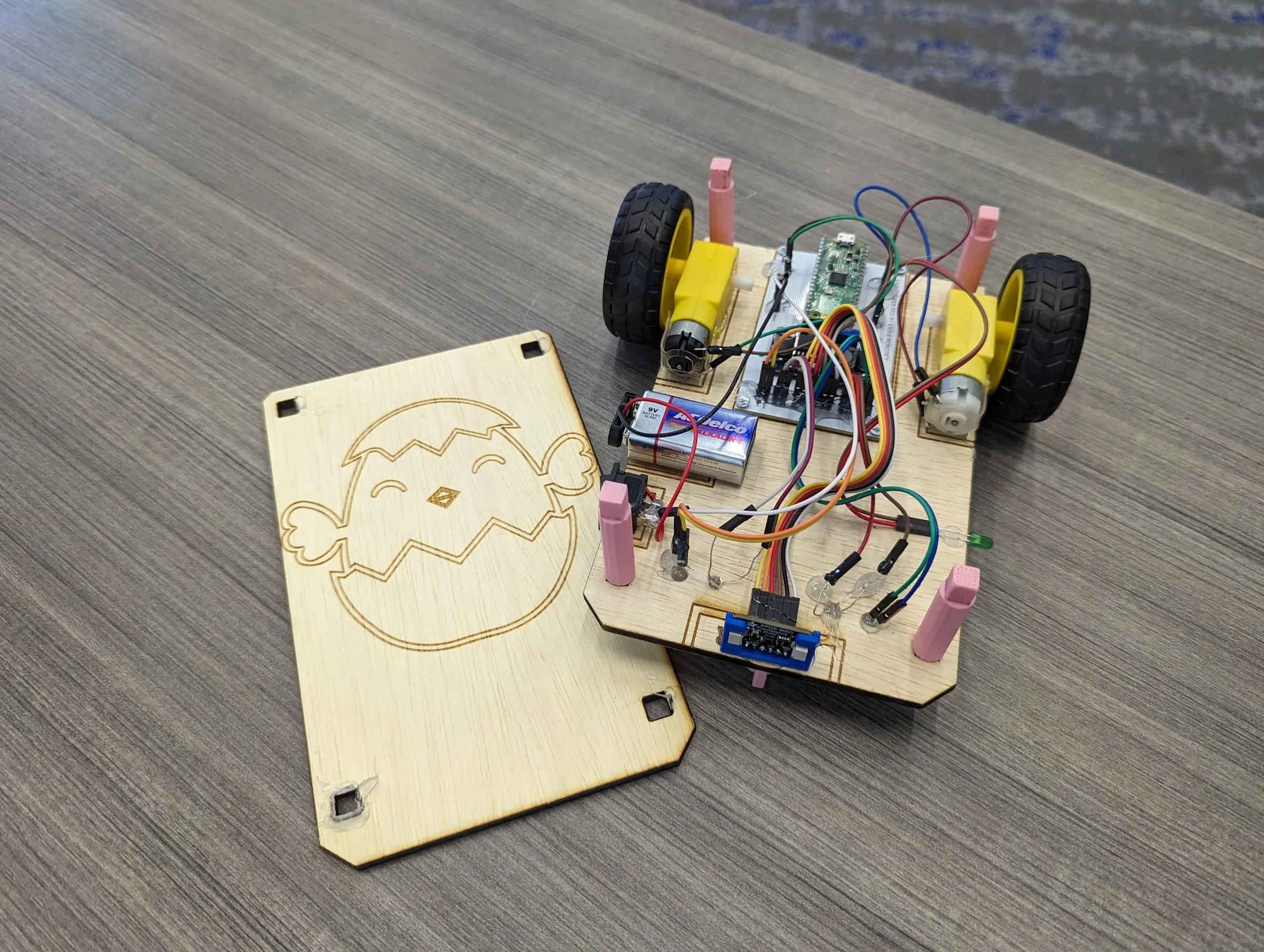
Generation 4
V3.6
The revision used for the 2025 camp season.
- No photograph on file for this revision.
Generation 5
Summer 2025 v1 / v2 / v3
Three breadboard-based kits, redesigned mid-season after the circuit boards failed, so that every booked camp still ran.
- No photograph on file for this revision.
Generation 6
V4
The KiCad-designed board, and the first version with its own schematic on file.
- No photograph on file for this revision.
Generation 7
V5
The production generation. Designed for 300 units across ten camps, and the first kit built to a manufacturing deadline rather than a prototype schedule.
- No photograph on file for this revision.
Generation 8
V6
The sensing generation. Closed-loop motion, time-of-flight ranging, and an inertial sensor, prototyped part by part through 2026.
The detailed history behind each revision, meaning what problem it solved, what changed, and what the team learned, is being confirmed with the technical officers before it goes up. We would rather publish it late than publish it wrong.
What we are improving
Open problems
Not a roadmap and not a promise. Just what the team is currently working on.
- Turns that repeat accurately, every time
- Longer runtime on a single battery
- Wheel alignment that survives a drop
- Motor connections that do not work loose
- Complete CAD documentation
- More durable assembly methods